When we talk about health, most people think about physical health – eating nutritious foods, exercising, getting enough sleep, and visiting the doctor. But mental health is just as important.
Mental health affects how we think, feel, connect with others, and handle life’s challenges. Everyone has good days and difficult days, but when feelings of sadness, stress, anxiety, or loneliness last for a long time, they can begin to affect daily life.
Research shows that people with disabilities experience mental distress at higher rates than the general population. According to the Centers for Disease Control and Prevention (CDC), nearly one-third of adults with disabilities report frequent mental distress—more than four times the rate reported by adults without disabilities. Studies have also found that people with cognitive and intellectual disabilities may be at an even greater risk for experiencing mental health challenges.
The good news is that there are many ways to support mental wellness, and no one has to face challenges alone.
Why Are Mental Health Challenges More Common?
There is no single reason why people with disabilities experience higher rates of depression, anxiety, and mental distress. In many cases, it is a combination of factors.
Some common challenges include: 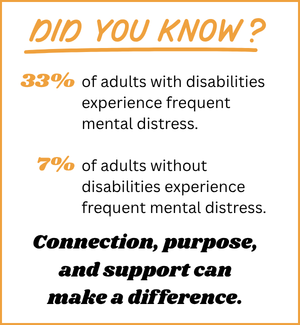
- Feeling isolated or lonely
- Limited transportation options
- Difficulty finding employment opportunities
- Health concerns or chronic medical conditions
- Changes in support systems
- Financial stress
- Experiencing barriers to participating in
community activities - Feeling misunderstood or excluded
Even positive life changes can sometimes create stress. Moving to a new home, starting a new job, learning new skills, or adjusting to changes in routine can all affect mental health.
Signs That Someone May Need Extra Support
Mental health challenges do not always look the same for everyone. Sometimes the signs are obvious, and sometimes they are subtle.
A person may be struggling if they:
- Withdraw from friends, family, or activities they usually enjoy
- Seem sad, worried, or irritable more often than usual
- Experience changes in sleep patterns
- Lose interest in hobbies or favorite activities
- Have changes in appetite
- Express feelings of hopelessness
- Have difficulty concentrating
- Show less motivation to participate in daily routines
Not every difficult day means someone is experiencing depression or anxiety. However, if these changes continue for weeks or begin affecting daily life, it may be time to reach out for support.
What Helps?
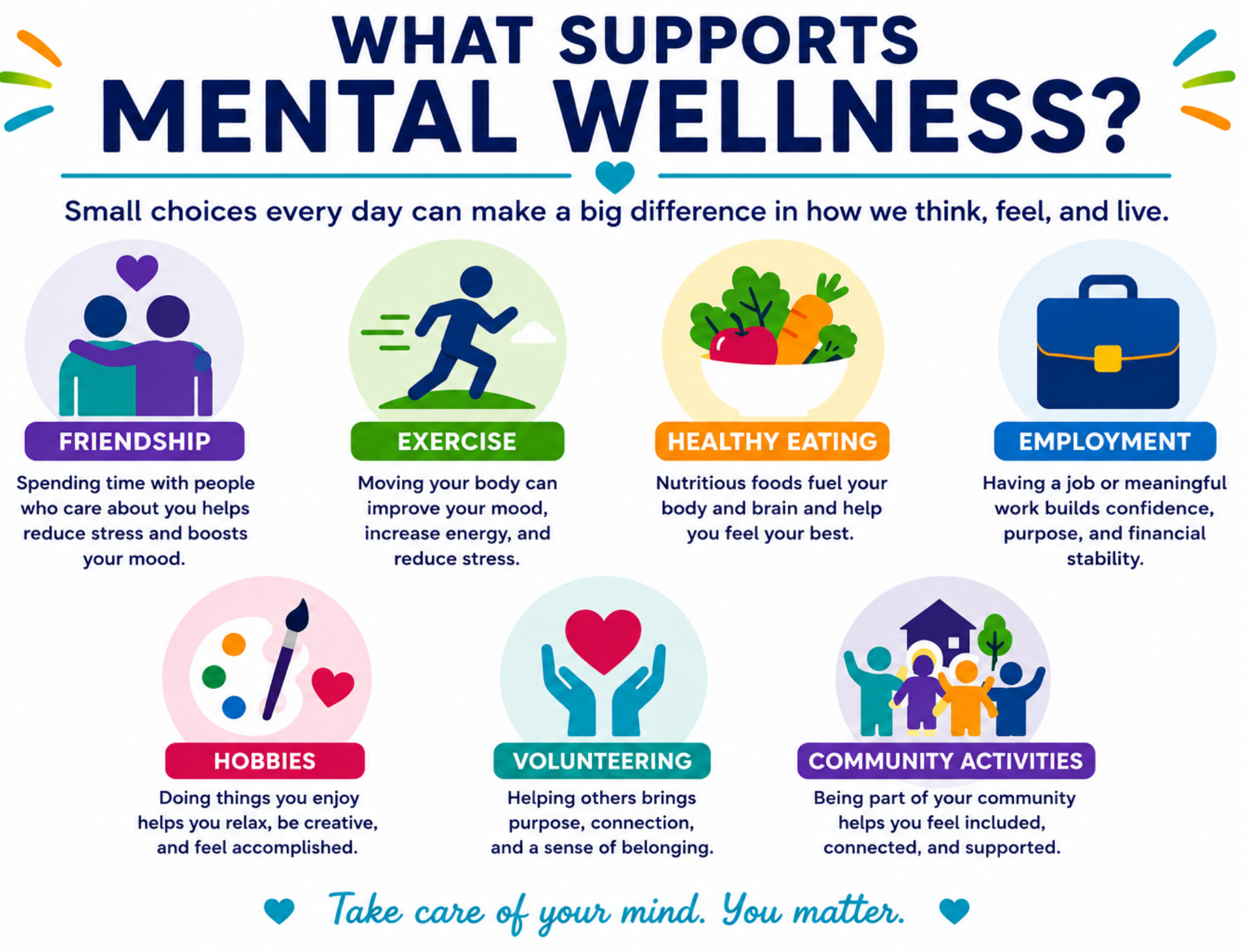
While there is no single solution for mental wellness, research consistently shows that connection, purpose, and healthy routines can make a significant difference.
Some helpful strategies include:
Stay Connected
Spending time with friends, family, coworkers, neighbors, or support groups can reduce feelings of loneliness and isolation.
Stay Active
Regular physical activity – even a short daily walk – can improve mood, reduce stress, and increase energy.
Build a Routine
Having structure and predictable daily activities can provide a sense of stability and accomplishment.
Find Purpose
Employment, volunteering, hobbies, classes, and community involvement help people feel connected and valued.
Talk About It
Sharing feelings with a trusted friend, family member, support staff member, counselor, or healthcare professional can be an important first step.
Practice Self-Care
Healthy meals, adequate sleep, relaxation, and enjoyable activities all contribute to better mental health.
How Project Independence Supports Mental Wellness
Many of the services offered through Project Independence help support mental wellness in ways that go beyond traditional mental health services.
Our programs help people:
- Build meaningful friendships
- Increase independence and confidence
- Learn new skills
- Participate in community activities
- Achieve employment goals
- Improve physical health through healthy living initiatives
- Create routines and structure
- Develop stronger support networks
When people feel connected, capable, and included, their overall well-being often improves.
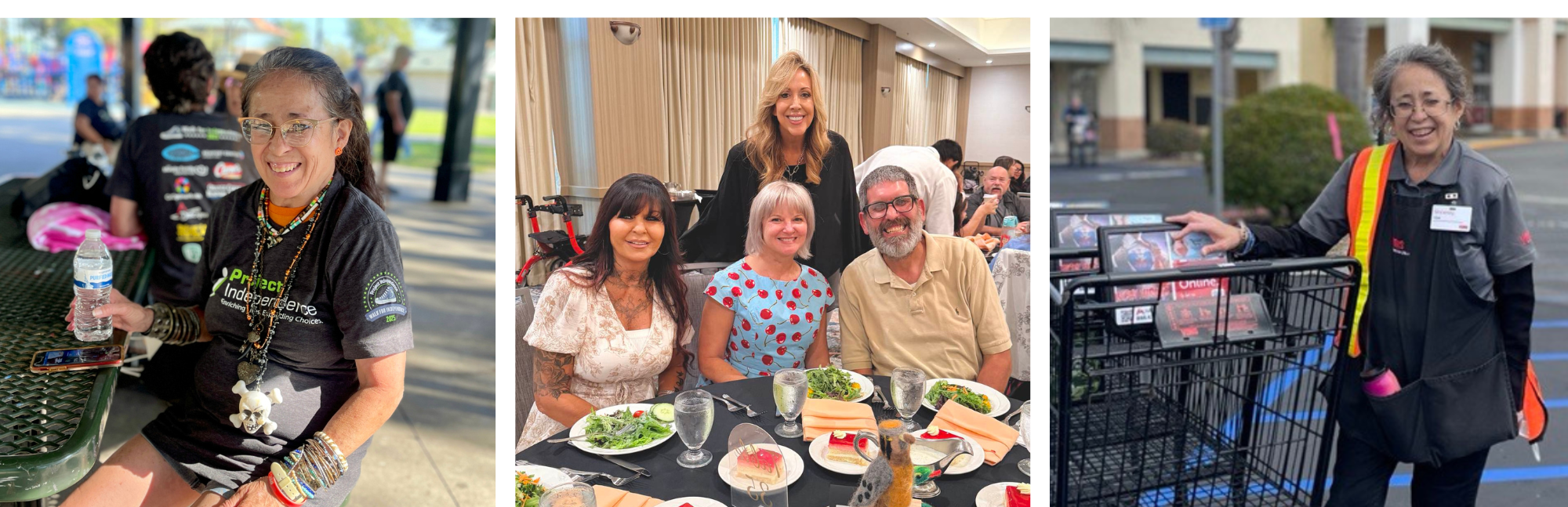
Connection, purpose, and community are powerful tools for supporting mental wellness.
Asking for Help Is a Sign of Strength
Everyone needs support sometimes.
Whether you’re a person receiving services, a family member, a caregiver, or a staff member, it’s important to remember that mental health challenges are common and treatable. Reaching out for help is not a sign of weakness – it is a sign of courage.
A conversation with a trusted person can be the first step toward feeling better.
By supporting one another, staying connected, and creating opportunities for people to thrive, we can build stronger minds, stronger communities, and brighter futures for everyone.
Mental Health Resources
National Resources
988 Suicide & Crisis Lifeline
- Call or text 988
- Available 24 hours a day, 7 days a week
- Free and confidential support for anyone experiencing emotional distress or a mental health crisis
National Alliance on Mental Illness (NAMI)
- Information, education, support groups, and resources for individuals and families
Mental Health America
- Mental health screenings, educational materials, and support resources
Orange County Resources
OC Links
- Behavioral health information, referrals, and crisis support
- Call: (855) 625-4657
- Available 24/7
NAMI Orange County WarmLine
- Free emotional support and resource referrals
- Call or text: (714) 991-6412
- Toll-Free: (877) 910-WARM (9276)
2-1-1 Orange County
- Information and referrals for mental health services, support groups, housing resources, and more
- Dial 2-1-1 or visit 211OC.org
Be Well Orange County
- Mental health and wellness resources, navigation services, and treatment support
- Call: (949) 749-2500