Nearly 50 years ago, Project Independence was founded on a belief that was far from universally accepted at the time: people with developmental disabilities should have the opportunity to leave institutional settings, live more independently, and become active members of their communities.
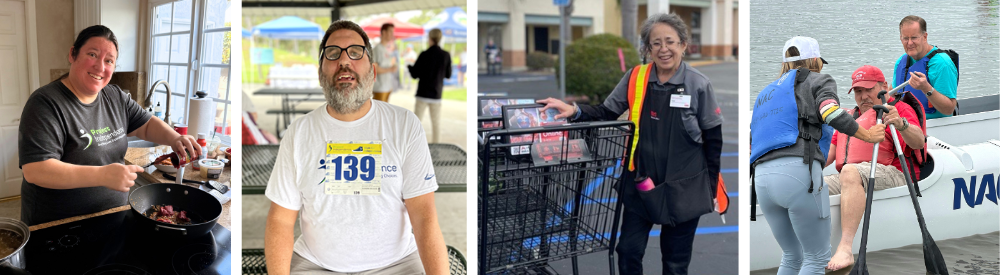
That belief has guided Project Independence since 1977. Today, the people we serve live in their own homes and apartments, work at businesses throughout Orange County, shop in their neighborhoods, build friendships, volunteer, participate in community activities, and make choices about how they want to live their lives.
More than two decades after Project Independence was founded, those same principles were reinforced by one of the most important disability rights decisions in U.S. history.
What Is the Olmstead Decision?
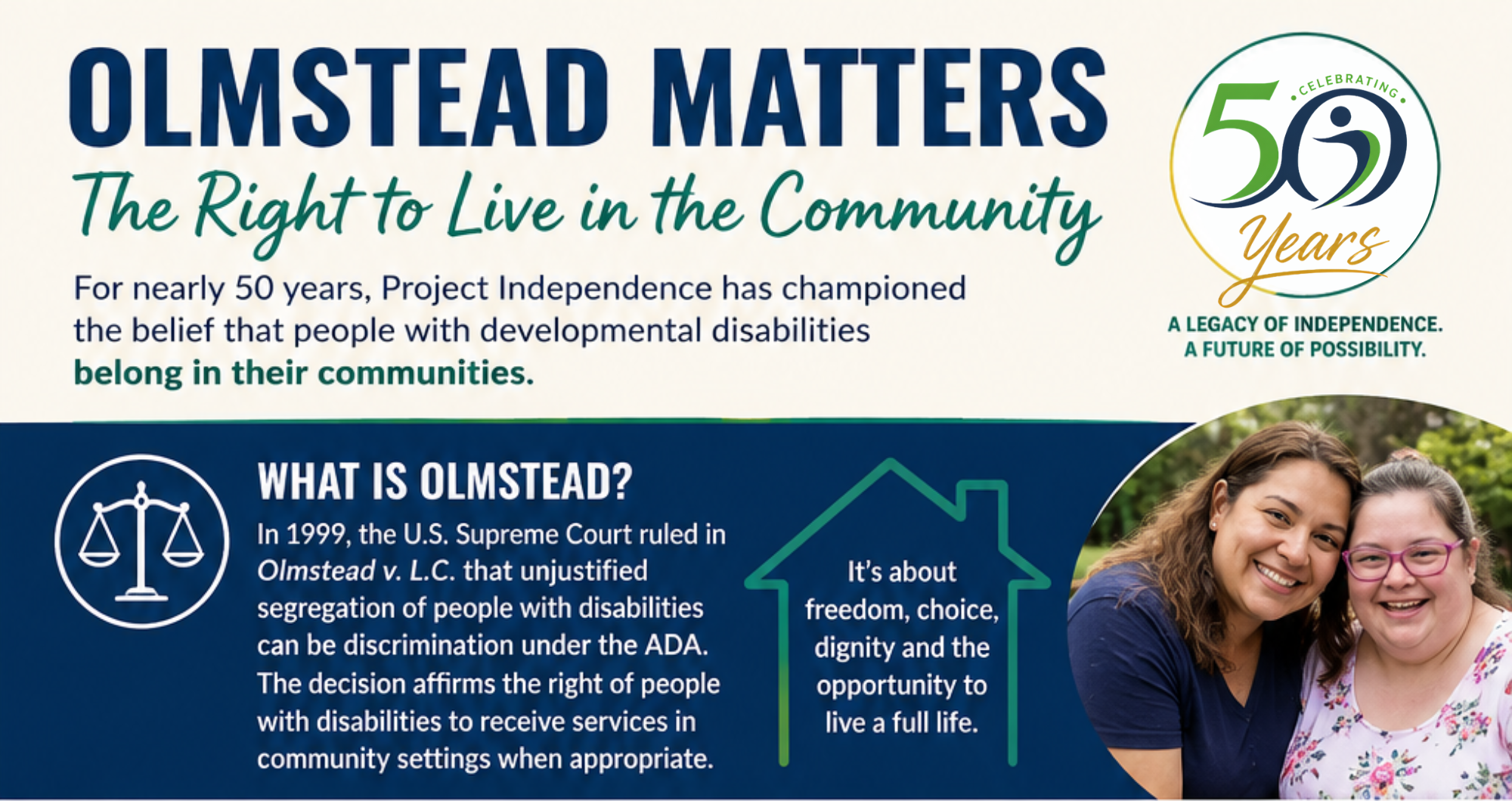
In 1999, the U.S. Supreme Court issued its landmark decision in Olmstead v. L.C., a case involving two women with disabilities who remained confined in a Georgia institution even after professionals determined they could be appropriately served in the community.
The Supreme Court held that the unjustified segregation of people with disabilities can constitute discrimination under Title II of the Americans with Disabilities Act (ADA). The ruling established important protections for people with disabilities to receive services in community settings when community-based services are appropriate, the individual does not oppose them, and the services can be reasonably accommodated.
Over the years, Olmstead has helped support a much broader movement toward community living, integrated employment and community-based services – the very opportunities that organizations like Project Independence work to provide every day. Federal guidance has also applied Olmstead principles to employment and day services, emphasizing opportunities for people with disabilities to work and participate alongside people without disabilities in their communities.
What Has Changed?
On June 18, 2026, the U.S. Department of Justice’s Office of Legal Counsel issued a new legal opinion challenging the longstanding federal interpretation of the ADA’s “integration mandate.”
The opinion argues, among other things, that Title II of the ADA and Section 504 of the Rehabilitation Act did not impose an integration mandate on states and that the Olmstead decision did not require states to provide services in the most integrated setting appropriate to an individual’s needs.
Importantly, the Supreme Court’s Olmstead decision has not been overturned.
However, the new federal legal interpretation has raised serious concerns among disability rights organizations about how vigorously community-integration protections will be enforced at the federal level and what that could ultimately mean for community-based services. Disability Rights California has been among the organizations speaking out about the potential impact on the rights of people with disabilities to live and receive services in their communities.
DOWNLOAD FULL PDF FLYER
Why This Matters
It’s easy for a Supreme Court decision or federal legal opinion to feel far removed from everyday life. But community integration is about very ordinary, and very important, things.
It’s about having a home in your community.
Going to work.
Shopping for groceries.
Meeting friends for lunch.
Taking a fitness class.
Volunteering.
Choosing what you want to do with your day.
And having access to the supports that make those choices possible.
For people with developmental disabilities, community-based services can make the difference between simply receiving care and having the opportunity to build a life of their own choosing.
Our Commitment Hasn’t Changed
As Project Independence approaches its 50th anniversary, the principle that inspired our founding remains as important today as it was in 1977.
We believe people with developmental disabilities belong in their communities, with opportunities to live as independently as possible, pursue meaningful employment, build relationships, make choices, and participate fully in community life.
For nearly five decades, Project Independence has worked to turn that belief into everyday reality for the people we serve.
And we will continue.
Community inclusion is more than a program model. It is a civil right.
A Legacy of Independence. A Future of Possibility.
Learn More
Read more about the recent federal legal opinion and its potential impact from Disability Rights California.